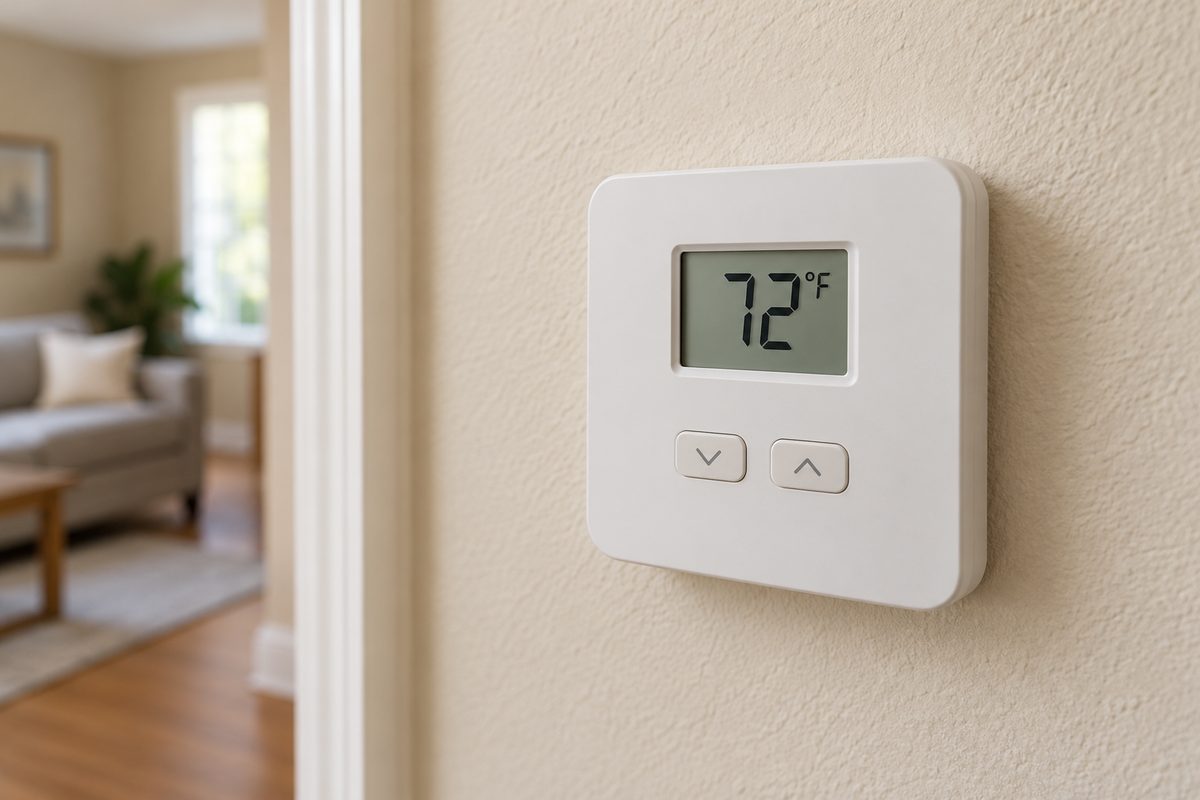
The starts became frequent after a setting change. Is that the cause?
Timing is a clue, not proof of the cause. Note the old and new settings if you know them. Does the room reach the target before heat stops? A schedule change and a fault in the heating unit may look alike during a quick glance at the screen.
Separate a target change from a stop
Watch for a target change at the time of the stop. If the target stays above the room reading, say so. If a schedule lowers the target, save the screen text. Do not enter installer settings to make the system run longer.
A stopwatch alone cannot show what is wrong. A furnace that keeps stopping before reaching its target needs a qualified check. Turn it off with its normal control if this continues. For a gas smell or alarm, leave first. Do not delay to touch the control.
Keep the history of the setting change
For an East or South Naples home with several users, ask who changed a schedule, hold or app setting. Find the sequence without assigning blame; a photo from before the change may help if you already have one. Do not recreate the fault to get a photo.
If a business changed the setup or fitted a new control, share the model and work record. Get the owner's consent before more setup changes or replacement. Being able to use the screen does not give you consent to alter the heating system.
Ask why another change is needed
Does the finding concern the schedule, the control's fit with the system or a fault in the unit? Each calls for different work. Ask what a proposed change will do and how its result will be checked. If airflow or system size is raised, ask what supports that finding. The recent setting change may not be the whole cause.