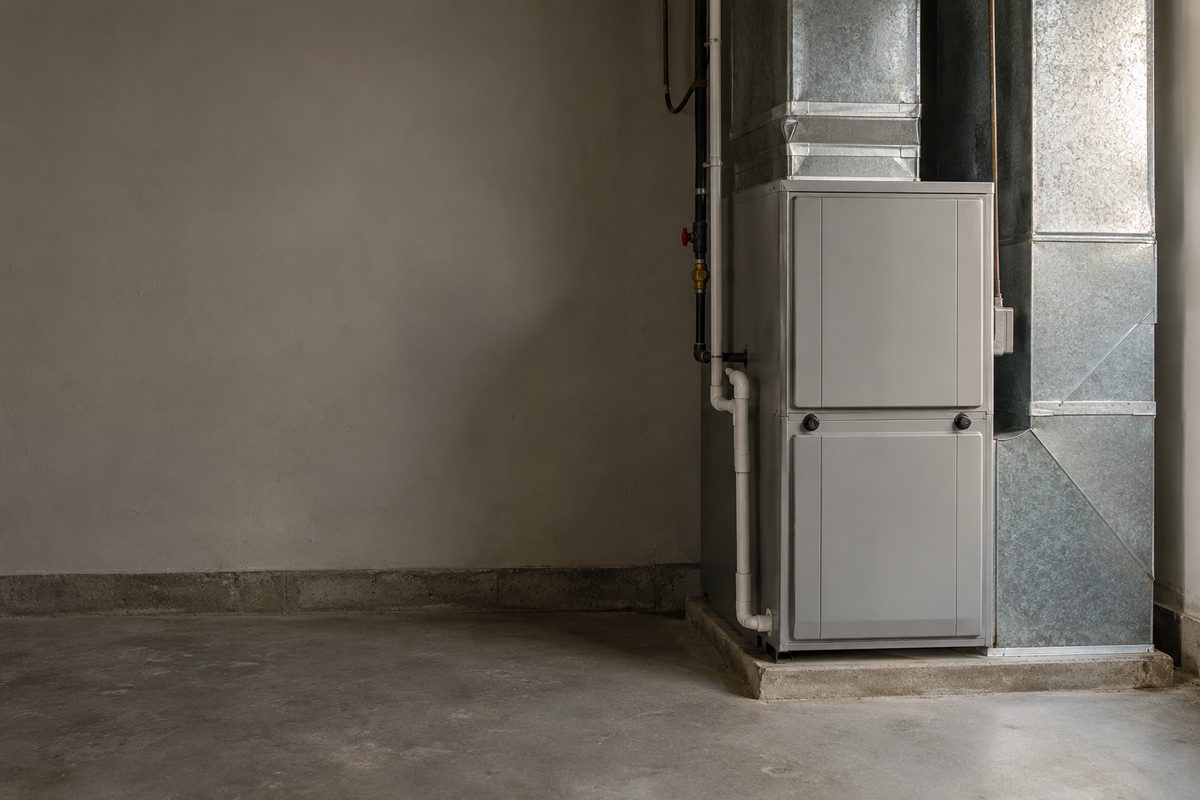
Does frequent stopping always mean the furnace is too large?
No. Airflow restrictions, thermostat conditions, sizing and internal faults can each affect cycling. The length of one run cannot establish which cause applies or justify replacing the furnace.
Record what stops and what continues
Note what happens during normal use without opening the unit. Does warm air stop while the fan keeps running? Does the thermostat still ask for heat? Or does the room reading reach the target first? These are different patterns.
Keep any notes or video you already have. Do not run a faulty furnace again and again to get a better sample. A short report may be enough: it warmed briefly, went cool, then tried again.
Consider airflow and control conditions
Restricted airflow can cause heat to build up inside a furnace and trigger a safety stop. Report a dirty filter or blocked grille. That alone does not prove the cause. Removing a visible blockage also does not prove the system is safe.
Sunlight, a draft or a nearby heat source can affect a thermostat's reading. Note those conditions without moving or rewiring it. A control fault can look like a furnace fault, so both need to be checked.
- A recent filter change, including the filter label if available.
- Rooms that stay cold even when the thermostat reaches its target.
- An alert, unusual sound or change in airflow during the stop.
Do not make a sizing decision from timing
A furnace that is too large may cycle rapidly. That does not prove yours is too large. If size is the reason for a new-furnace proposal, ask for the calculation or test that supports it.
Explain whether the fault is new or has existed since the unit was installed. Tell us if it used to heat the home well with the same controls. This gives the check a starting point without assuming the cause.
Ask for the cause behind the shutdown
A useful repair report explains why the run ended, not just which part can be changed. Ask if the work will fix airflow, a control fault or an internal fault. Safety switches must not be disabled to keep heat running.
If new ducts or a new furnace are proposed, ask for a separate scope and access plan. Mention shared controls, locked spaces and prior work. Agree on the visit charge in advance. Approve a repair only when its purpose is clear.
More about this heating problem
Is there one run time that proves short cycling?
A repeated stop before the home warms is more useful to report than an isolated number. Cycle length alone cannot identify a failed part, a control issue or incorrect sizing.
Should I install a stronger filter to fix it?
Do not choose a filter by a higher rating alone. Use the equipment's specified filter requirements. Record any recent filter change so airflow can be considered during the assessment.