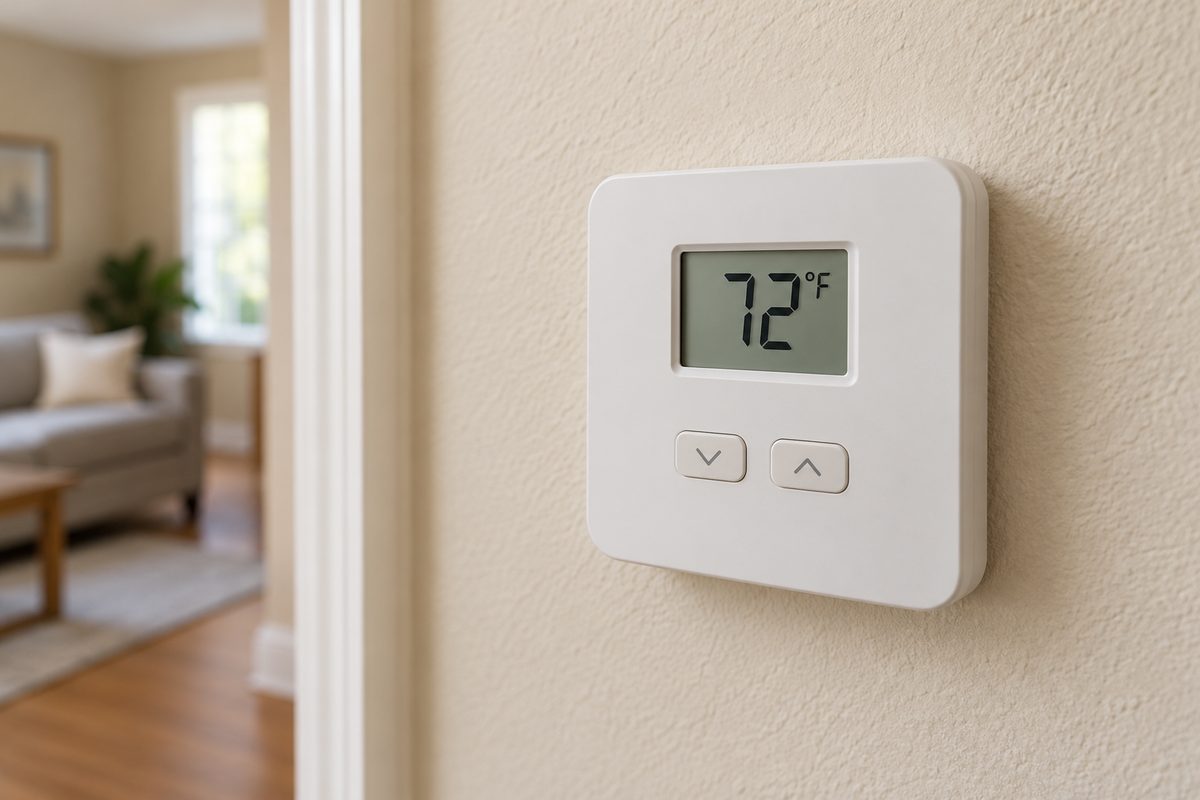
The thermostat says it is warm, but the sitting area feels cold. Which is wrong?
Neither reading proves a part has failed. The thermostat measures conditions at its own spot. You feel the room where you sit. Describe both places and when they differ. A warm reading may relate to nearby heat, a control fault or a separate comfort problem in the room.
Notice what is near the control
Notice whether sun reaches the thermostat, a nearby appliance is on or a door is open when the readings differ. Heat sources and drafts can affect what it reads. These clues do not prove the control needs moving. Note them for the person checking it.
Use the same room and time of day when describing the issue. Keep the room reading separate from the target. If you have another room thermometer, say where it was placed. Readings from different spots are not a test of the thermostat's accuracy.
Explain which space needs checking
For an East or South Naples home, say whether the cold area is part of the original layout or was added or enclosed later. Share plans if you have them. A room opening off the living area may still use a different heating system. Do not assume they share one.
If the space is rented or shared, get consent before moving a control or changing wiring. Make sure the owner knows what is proposed. Is it a new wall control, a new location or work to bring heat to another room?
Ask how the fix addresses the cold room
Before buying a thermostat, ask what testing found. How would a new one solve this mismatch? If it needs moving, ask about the new spot and the system's needs. If the control works, airflow or room conditions may need checking. A new thermostat does not prove that every room will feel right.