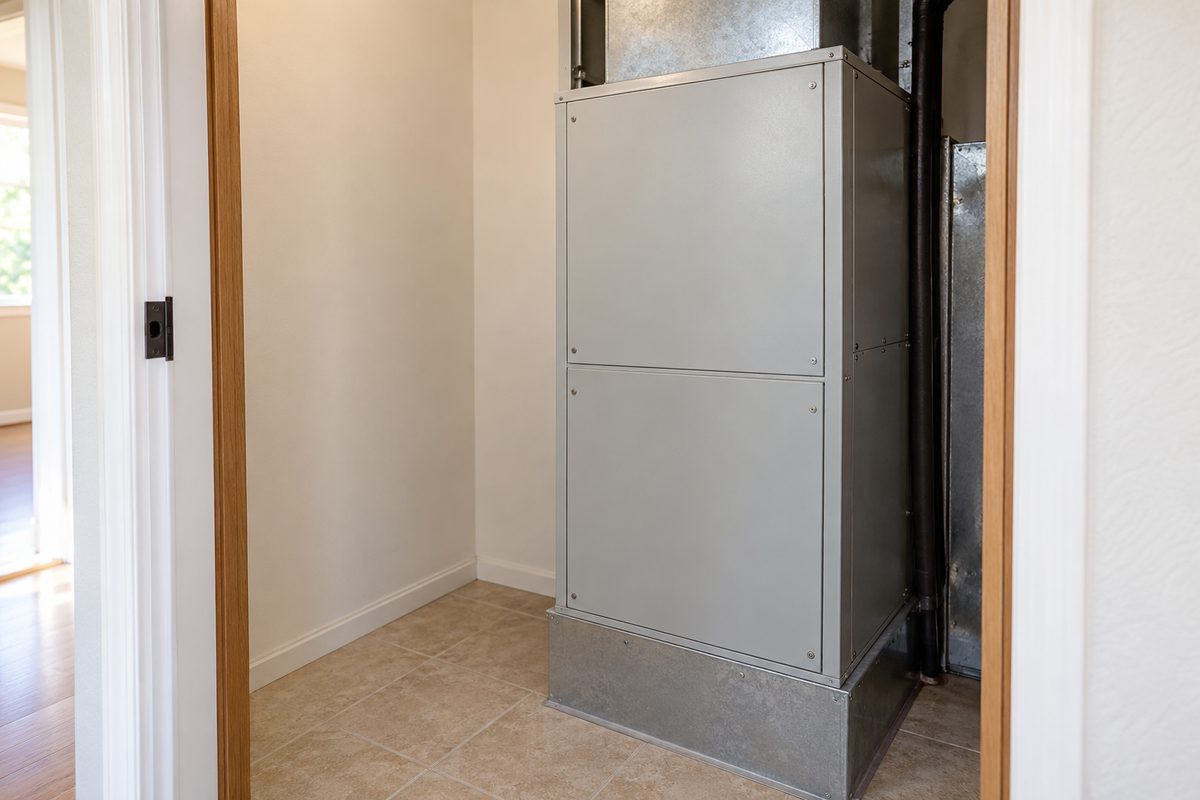
What if I cannot safely reach the furnace label or cabinet?
Leave it alone. Use an existing manual or invoice if available, describe the thermostat's response, and explain what makes equipment access difficult before arranging an assessment.
Start at the control you can reach
Note if the screen is blank or lit, its mode and its room and target readings. Save any alert exactly. Do not reach behind the control or remove a wall plate to look for a cause.
If you hear the unit from the room, say if it stays silent or tries to start. Do not enter an attic, climb to a platform or open a cabinet to listen. Tell us what you cannot safely observe.
Explain the access limit precisely
Say if access needs a key, involves a high unit or leads through a tight space. Do not call it easy access if a ladder is needed. Mention who controls entry and who can grant it.
Keep clear of water near electrical parts and visible wiring damage. An open path is not always safe. Planning safe entry to the unit is separate from describing the no-start fault.
Leave the cause open until assessment
Silence can involve settings, power, controls or a safety fault. You do not need a cabinet photo to explain the symptom. Ask which test will separate the possible causes before a part is chosen.
Give the Golden Gate Estates address and where the unit sits on the property. Check the charge and access needs before a visit. If work requires an opening or a change to the access route, ask for that scope before you approve it.
More about this heating problem
Should I reset a remote breaker first?
Do not search unsafe or unfamiliar areas to perform a reset. Report any known power interruption or trip and let the assessment address its cause.