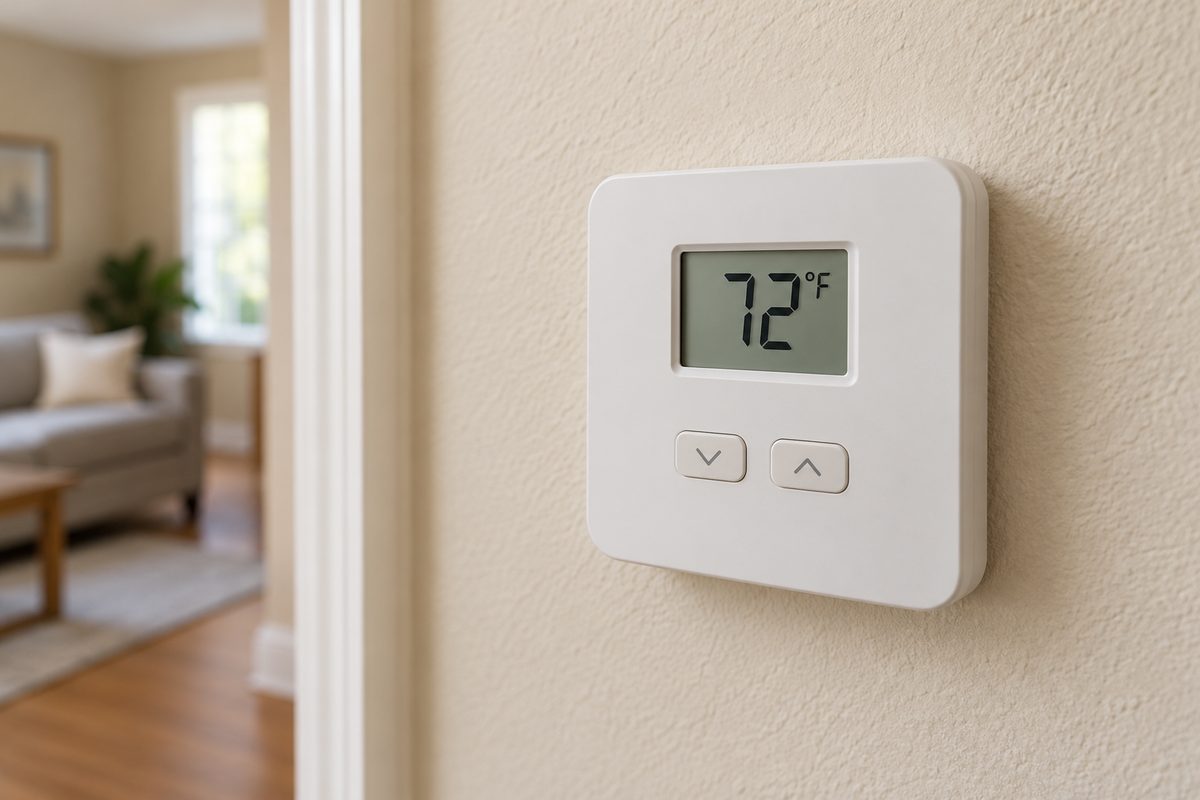
Does an outage prove that a furnace control was damaged?
No. A setting, delayed response, power issue or equipment fault may be involved. Record the sequence and any alert before deciding that a part needs replacement.
Build a short timeline
Note when power went out and when you first asked for heat after it returned. Check the normal screen for its mode, target and any delay message. Use the control's manual rather than a fixed waiting time for all systems.
Did the screen stay blank, come back on, or show Heat with no response from the unit? Save the exact alert if one appears. Do not keep clearing it. The original message can help explain the fault.
Avoid a reset loop
Do not keep cycling power or resetting a breaker until the furnace runs. A repeated trip or shutdown needs a qualified check. Leave covers, wiring and fuel controls alone.
Use the manual before a battery change, even if the battery compartment is easy to reach. A working screen does not prove the whole system has safe power. Report what you can see; leave internal tests to a technician.
Identify the equipment and access
Use an old invoice or manual if the furnace label is hard to reach. Tell us if the home has several heating systems. Match the complaint to the correct one before a visit.
Give the Golden Gate address and state who can approve work. Ask what test supports the repair and what the visit charge covers. An outage should not lead straight to a new control board without proof of a fault.
More about this heating problem
What if the breaker trips again?
Stop resetting it and arrange professional assessment. Keep clear of damaged wiring, burning smells or water near electrical equipment.