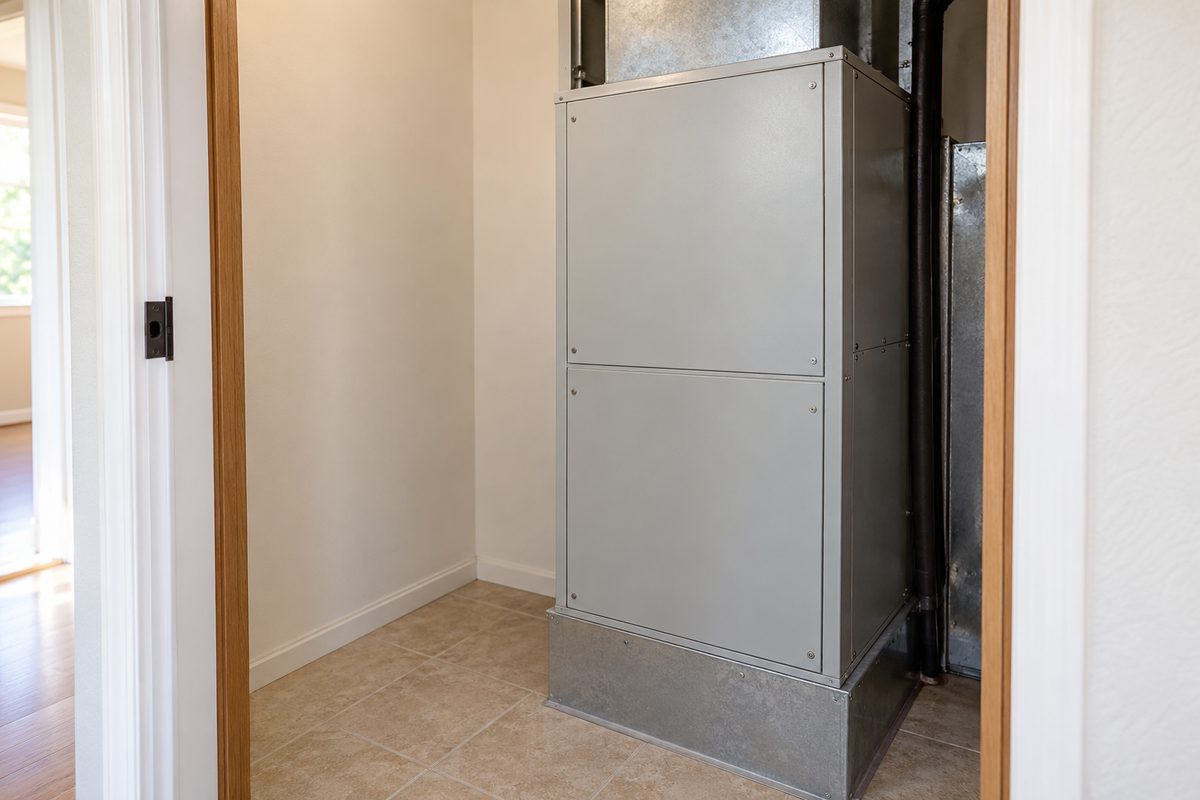
What matters when the display works but the heater stays silent?
A lit screen does not prove the heating unit has power. Nor does it show whether the unit received the call for heat. Note what changed on the screen and what happened next. Silence alone is not a reason to buy a thermostat, motor or ignition part.
Record the first response
Read the normal screen and note the mode and target. Was there silence, a click, a fan sound or a message? Use what you can see from the room or a normal walkway. A photo can save the exact screen text without opening the cabinet.
Say if the fault began after an outage, service visit or control change. Avoid power resets to get another response. A fault may still need checking even if a restart hides it. Keep a visible code instead of clearing it.
Identify the unit before the visit
If your North Naples property has several systems, describe the fault by room or control location. “The upstairs hallway thermostat” is clearer than “the main unit.” Do not turn off or test a neighbor's equipment to work out which one is yours.
If a manager must unlock a service room, ask how to arrange entry. Agree who can approve the checks and any repair. Entry to the home may not give access to every part of the heating system.
Keep the check and repair decisions separate
Ask what caused the no-start fault, what was checked and whether the proposed work concerns power, controls or the heating unit. Get the scope before parts are ordered. A phone discussion cannot prove the system needs replacement. If a new system is proposed, ask why repair is unsuitable. Check the added access and permit needs.